
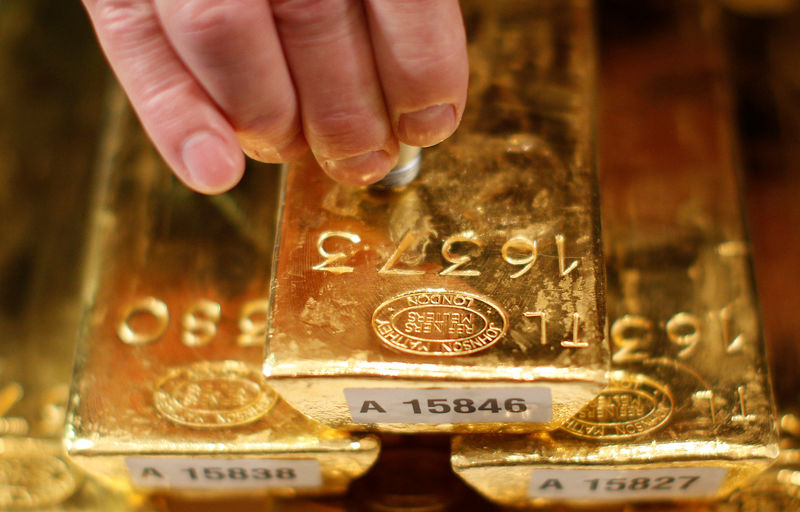
Gold prices rose in Asian trade on Monday, extending gains after hitting a near two-month high in the prior session as weakness in the dollar and Treasury yields, following less hawkish signals from the Federal Reserve, buoyed metal markets.
Silver prices remained close to record highs after stellar gains last week, while broader metal prices also advanced.
Focus this week is squarely on two key U.S. economic indicators– nonfarm payrolls and consumer price index inflation– which are likely to factor into the Fed’s outlook on interest rates.
Spot gold rose 1% to $4,343.62 an ounce, while gold futures for March rose 1.1% to $4,375.80/oz by 01:00 ET (06:00 GMT).
Spot silver rose 1.6% to $62.9865/oz, remaining close to a record high hit last week. Spot platinum rose 1.8% to $1,781.09/oz.
Gold, metals extend gains after dovish Fed signals hit dollar, yields
Gold and other metals largely extended gains from last week, as the sector was boosted by weakness in the dollar and Treasury yields.
This came largely following dovish signals from the Fed, after it cut interest rates last week and signaled it will immediately begin buying short-dated Treasuries from December, at a monthly pace of $40 billion.
The Fed’s asset buying activities present a dovish outlook for monetary policy, especially given that local liquidity conditions are likely to loosen further with the cash injections.
Gold stands to benefit in such an environment. But the Fed’s announcement also buoyed haven-linked demand for gold, given that it raised questions about the health of the U.S. economy.
Nonfarm payrolls, CPI data awaited
Focus this week is squarely on U.S. nonfarm payrolls and CPI data for November, due on Tuesday and Thursday, respectively.
The payrolls print, which usually lands on the first Friday of every month, was delayed due to a long-running government shutdown in October and November.
But markets will be watching closely for more signs of easing labor market growth and cooling inflation, given that the two are the Fed’s biggest considerations for cutting interest rates.
The prints will also be the most recent official economic readings available to markets after the government shutdown disrupted several key prints for October.


 한국어
한국어
 Tiếng Việt
 中文
中文